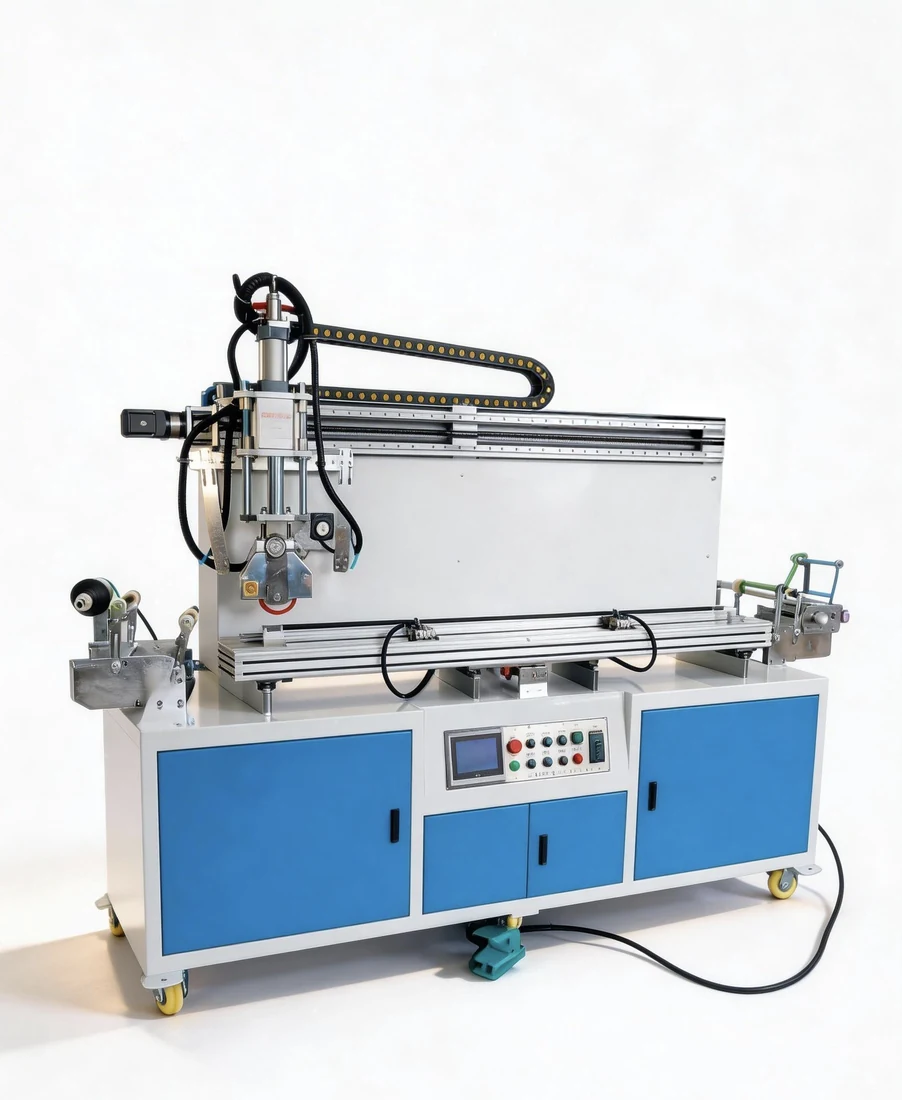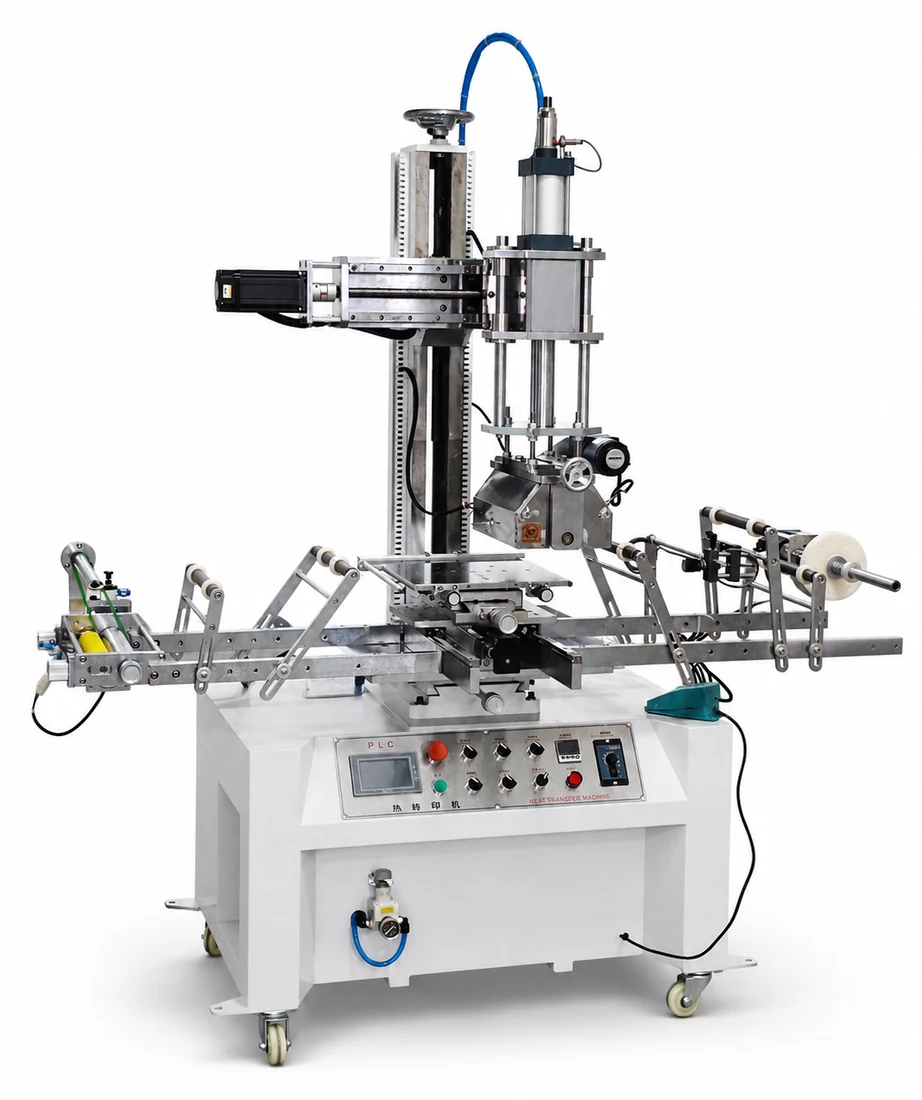
Machine features
Configuration and operation
Large flat transfer platform with product in-out worktable.
Related applications
Flat Surface Heat Transfer and Hot Stamping MachinesFlat Plastic Card and Panel Hot Stamping Machines
Machine overview
HF-1000
Long flat plastic surfaces such as mahjong table side panels.
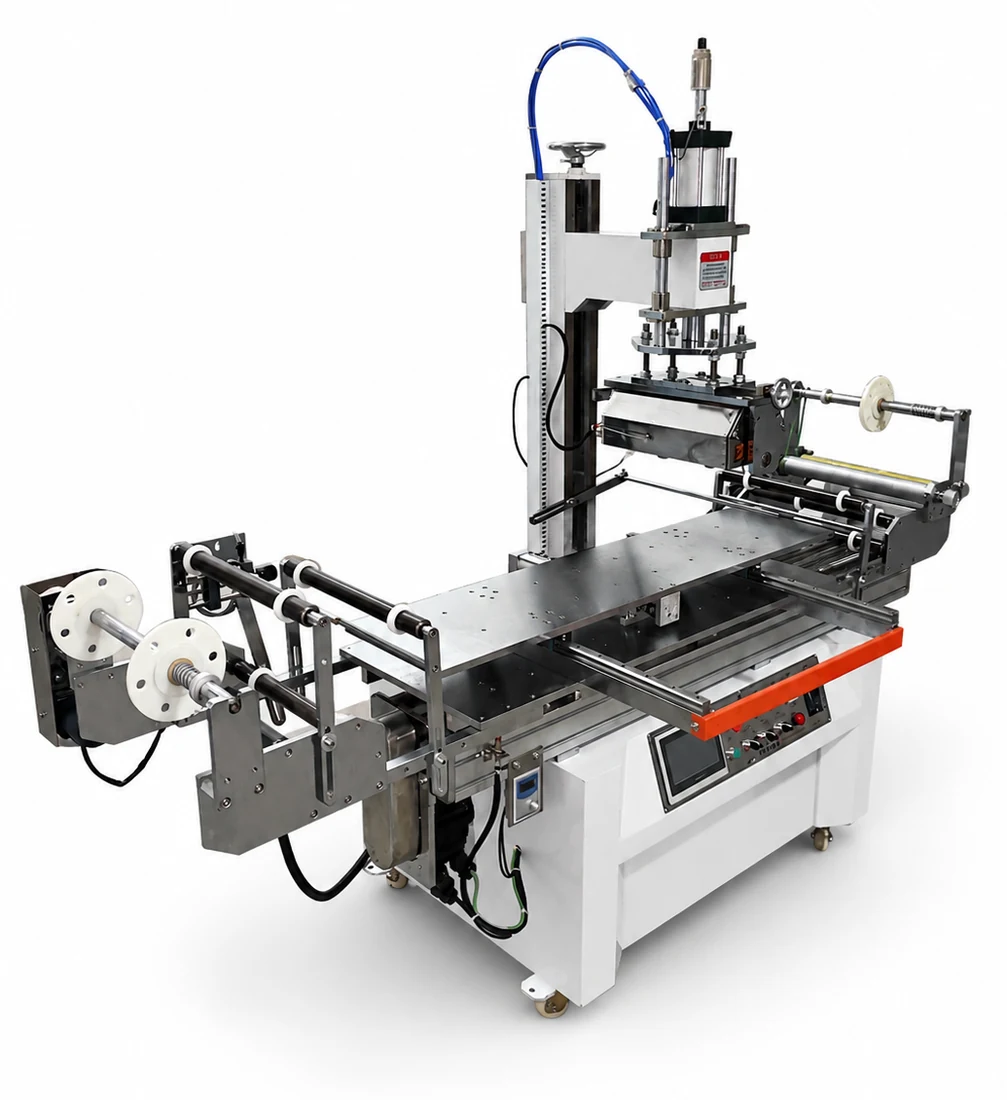
Machine features
Large flat transfer platform with product in-out worktable.
Suitable workpieces
Machine strengths
How the machine works
Place and locate the panel
Thread and align the transfer film
Run the roller across the decoration area
Remove and inspect the finished panel
Decision framework
Use this model page to decide whether a long flat workpiece can be supported inside the verified 800 × 240 mm transfer area and moved through a stable heated-roller stroke. It is not a substitute for a sample trial.
Compare the 800 × 240 mm maximum transfer area with the artwork, not only the outside dimensions of the panel. Keep locating and clamping space outside the effective decoration band.
A long panel that bows under roller load will receive uneven contact even when the displayed pressure is unchanged. The fixture must support the print band without marking the visible surface.
The film must enter, remain aligned and separate without a tension step during the useful stroke. Registration, guide position and waste-film take-up are qualified as one motion sequence.
Send panel dimensions, printable area, support condition, film sample and target output. These determine fixture design, operator access and whether a different machine or automation route is more appropriate.
Field diagnosis
| Observed symptom | Priority judgement | Check first | How to confirm |
|---|---|---|---|
| One fixed strip transfers lightly | Local support, flatness or roller parallelism | Map the defect to the fixture and inspect the contact trace before increasing heat. | Correct support or alignment and repeat at the same process settings; the fixed light band should move or disappear. |
| Film walks sideways or wrinkles | Guide alignment, unequal edge tension or changing peel line | Trace both film edges from unwind through contact to take-up and observe where the first deviation appears. | Run repeated dry strokes; both edges should track consistently before heat-transfer trials resume. |
| Leading or trailing edge is incomplete | Useful artwork enters before contact, speed or film tension is stable | Compare the defect with the start and end of the roller stroke and the position of the artwork on the film. | Separate the transient approach and release zones from the effective decoration band, then verify consecutive panels. |
| Panel gloss or shape changes | Excess energy, pressure or inadequate fixture support | Compare decorated and undecorated areas after the machine reaches a stable thermal rhythm. | Change one factor only and confirm transfer, edge definition and panel dimensions together. |
Release criteria
Connected evidence
These routes are connected by selection conditions, process mechanism and validation order; they do not imply universal machine fit.
Related machines
Long structural parts requiring narrow-width long-distance surface hot stamping, such as TV frame strips.
View machine detailsComplex flat structural parts such as appliance panels, e-bike side boxes and sanitary plastic parts.
View machine detailsContact Hengfa
Send product photos, dimensions, material, artwork position and output target. We will recommend a suitable machine configuration.